


The material
What sintered stone actually is
Mineral particles — the same clays, feldspars and stone powders that make up natural rock — are pressed under extreme pressure and then fired at high temperature. The particles fuse into a single ultra-compact slab. That process is called sintering, and it is where the material gets its name.
What matters for specification is what is not in it. Sintered stone contains no resin binders, so there is nothing in the slab to soften under a hot pan, yellow in sunlight, or absorb a spill. It is a mineral surface all the way through.
Sintered stone is not engineered stone. Engineered quartz binds stone particles with resin; sintering fuses them with heat and pressure instead, with no binder at all.
Benefits
Why it gets specified
Nine properties that follow from how the material is made. Each one is the reason a particular kind of job lands on sintered stone.
It handles heat
Sintered stone is highly heat resistant. A pan straight off the cooktop will not soften or mark the surface the way it can on a resin-bound benchtop. Your fabricator will still recommend trivets near joins and cut-outs, where any slab is at its most vulnerable.
It resists scratches
The fired mineral surface is hard enough to shrug off everyday kitchen work — knives, ceramic bases, grit tracked across a floor. It is one of the reasons the material is specified for commercial fit-outs as readily as for kitchens.
It does not stain
Sintered stone is non-porous, so red wine, olive oil, coffee, turmeric and ink sit on the surface instead of soaking into it. Spills wipe away rather than becoming a permanent shadow, which is what makes it forgiving in a working kitchen.
It never needs sealing
Because there is no porosity to close, there is nothing to seal — not on installation, and not every couple of years afterwards. Marble and limestone need a sealing schedule; sintered stone does not have one.
It can go outside
Sintered stone is UV-stable, so colours and patterns hold rather than fading or yellowing in Australian sun. That is what lets it run from an indoor benchtop straight out to an alfresco kitchen, a pool surround or a façade.
It is food-safe
The surface is food-safe and, being non-porous, gives nothing for moisture or residue to sit inside. Warm water and a mild detergent is the whole cleaning routine.
No resin binders
Engineered quartz holds its stone particles together with resin. Sintered stone has no binder — the particles are fused to each other. It is a mineral slab through its full thickness, not a composite.
Large format, fewer joins
Sintered stone is manufactured in large-format slabs, so a long run of benchtop or a floor-to-ceiling wall can be covered with fewer joins than a smaller format allows. Thinner slabs also open up cladding and splashbacks, where weight is the constraint.
It repeats
Every natural stone slab is a one-off, which is its appeal and its risk. Sintered stone is manufactured, so slabs of the same product match — useful when a job needs several slabs, a reorder, or a benchtop and splashback that read as one piece.
Applications
Where it works
Counts are the sintered slabs currently in MAMO's range rated for each application.
Kitchen benchtops
Heat, knives and daily spills in one surface — the application the material's properties line up with most directly.
Splashbacks
Carry the benchtop slab up the wall for a continuous run, or introduce a contrasting slab as the feature.
Bathrooms
Vanity tops, shower walls and floor-to-ceiling surfaces, where a non-porous slab earns its place.
Outdoor
Alfresco kitchens, outdoor benchtops and pool surrounds — this is where UV stability matters most.
Cladding & façades
Large-format slabs cover interior and exterior walls with genuine mineral surface rather than a print of one.
Flooring
High-traffic residential and commercial floors, indoors and out, with continuity from floor to benchtop.
Feature walls
Let one slab's pattern run uninterrupted, or book-match a pair into a mirrored feature.
Furniture & tabletops
Dining and console tops that take heat and wine without a sealing routine behind them.
Formats
Slab sizes, thicknesses and finishes we stock
MAMO supplies and delivers the full slab. Cutting, fabrication and installation are carried out by your own stonemason, who will template to your job.
| Specification | Available |
|---|---|
| Slab formats | 3200 x 1600mm (59), 2700 x 1200mm (23) |
| Thicknesses | 12mm (53), 6mm (34), 20mm (13) |
| Finishes | Honed (31), Polished (23), Natural (16), Ultrasoft (4), Textured (4) |
Care
Looking after it
Everyday
Warm water, a mild detergent and a soft cloth. That is the maintenance routine in full — there is no sealing step and no annual treatment.
Stubborn marks
A non-abrasive cream cleanser lifts most of what water will not. On polished finishes, keep abrasive pads and scouring powders off the surface; they can dull a polish on any material.
What to avoid
Harsh solvents and strong drain or oven cleaners are unnecessary here and are worth keeping away from the silicone in your joins. Follow the care sheet supplied with the slab.
Technical guides
Each product page carries the manufacturer's technical and care documents for that specific slab. Download them before fabrication and pass them to your stonemason.
Compare
Sintered stone against natural stone
MAMO supplies both, and the honest answer is that they are different choices rather than a ranking. Natural stone is specified for its individuality; sintered stone for its predictability. How they behave on the four things a surface is usually chosen on:
| Material | Sealing | Acids & etching | Heat | Slab consistency |
|---|---|---|---|---|
| Sintered stoneThis page | Non-porous. No sealing on installation, and none over its life. | Will not etch or patina. | Highly heat resistant. Trivets still sensible at edges and cut-outs. | Manufactured — slabs of the same product repeat. |
| Natural stone | Porous to varying degrees — normally sealed after installation, then resealed periodically. | Marble etches readily on contact with acids; granite and quartzite are far less reactive. | Tolerates heat well. Use trivets and boards. | Every slab is unique — no two repeat. |
The range
Sintered stone at MAMO
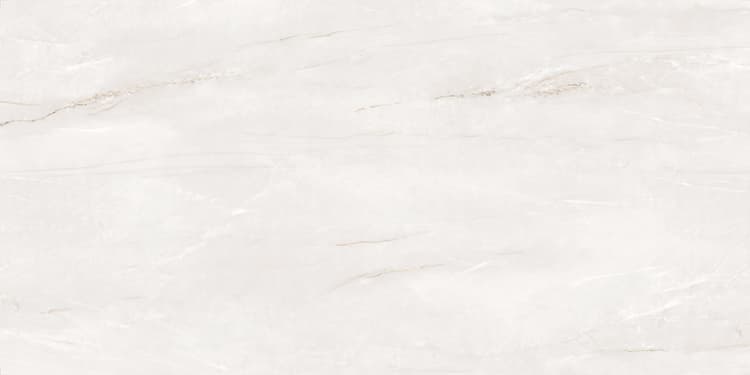
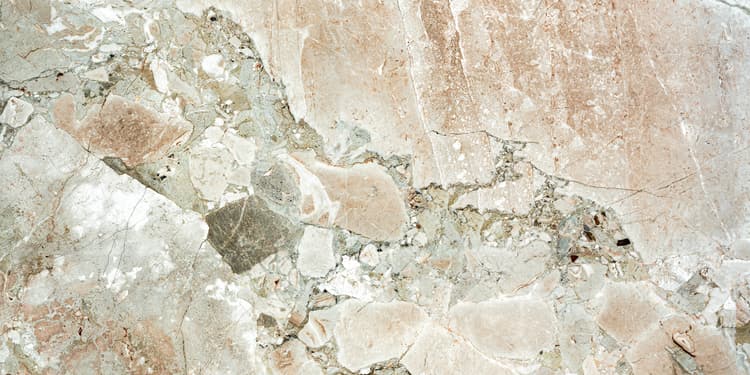
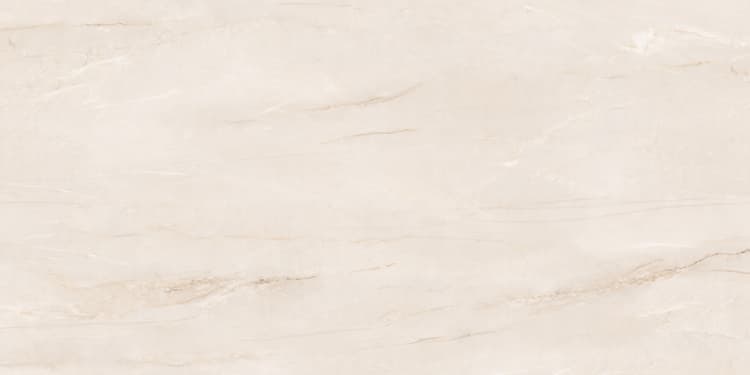
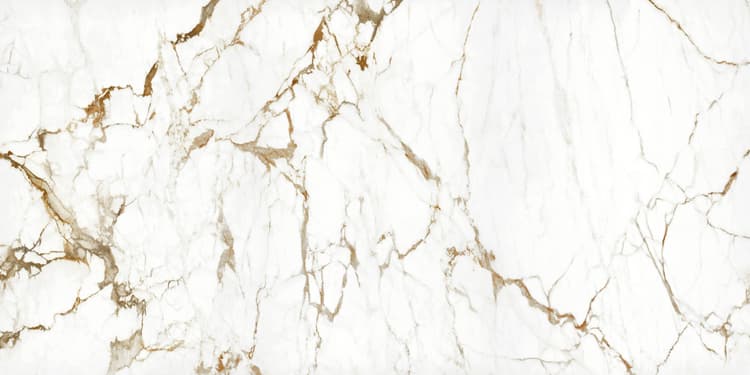
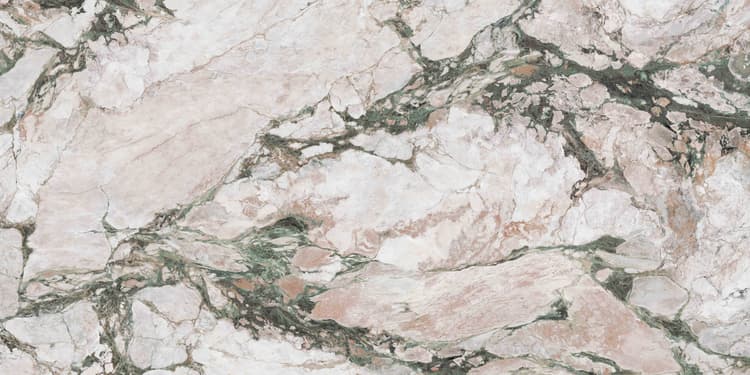
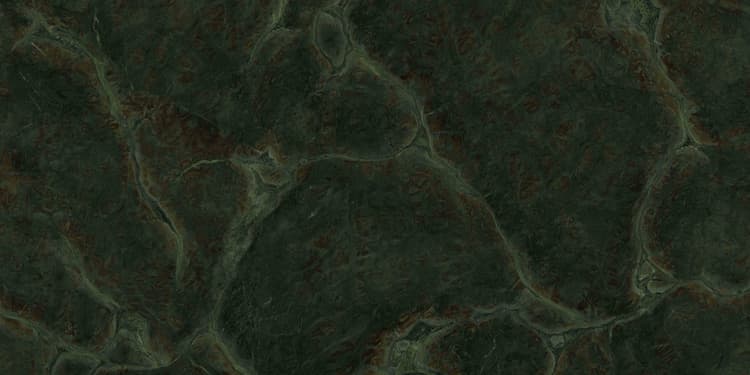
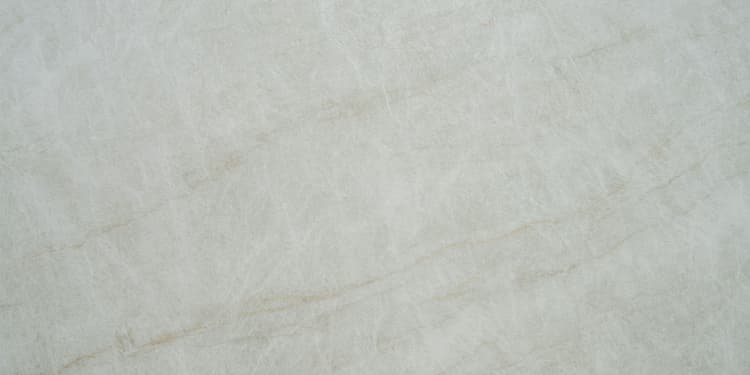
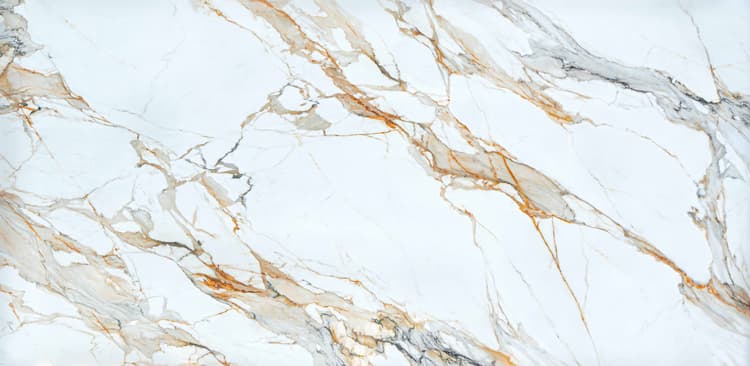
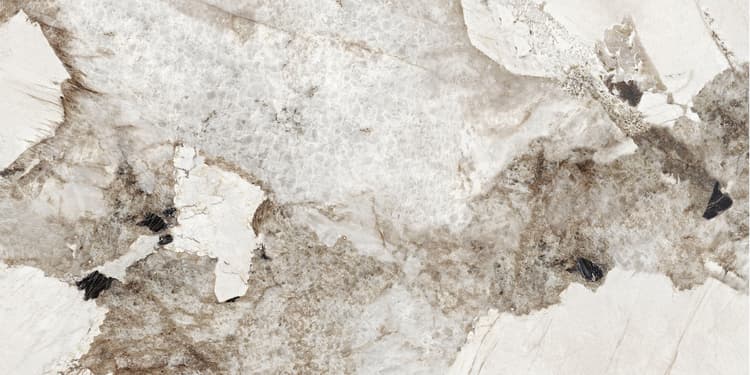
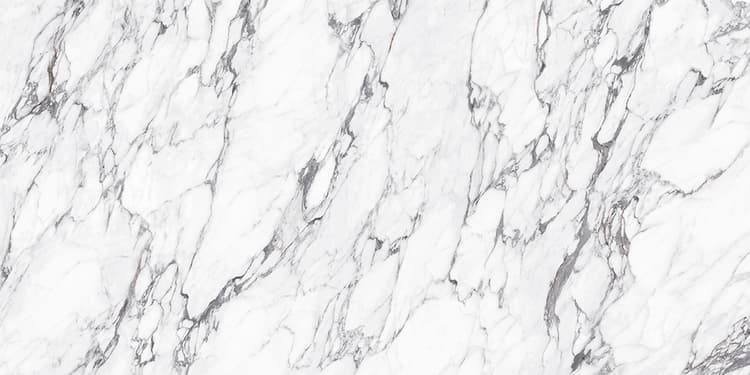
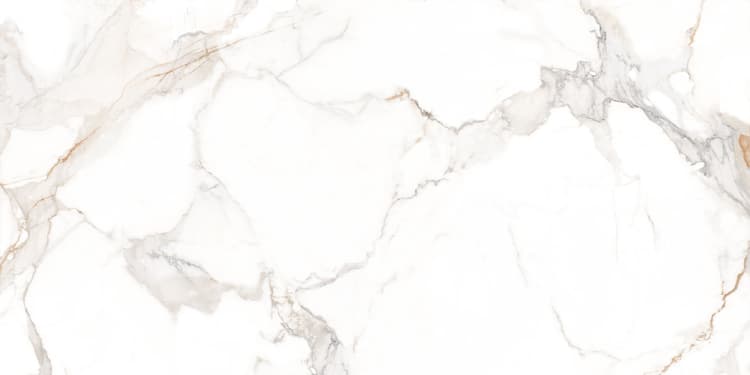
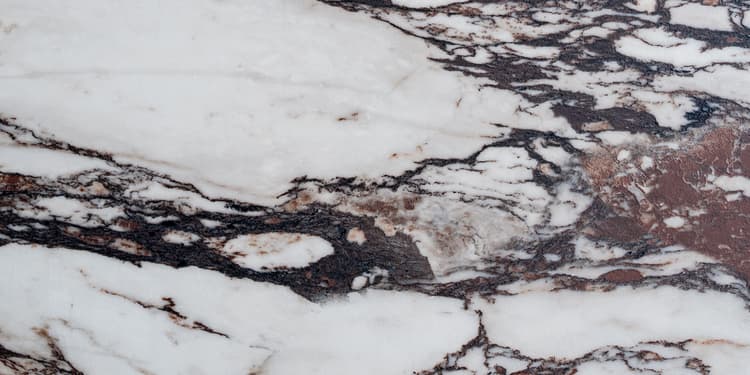
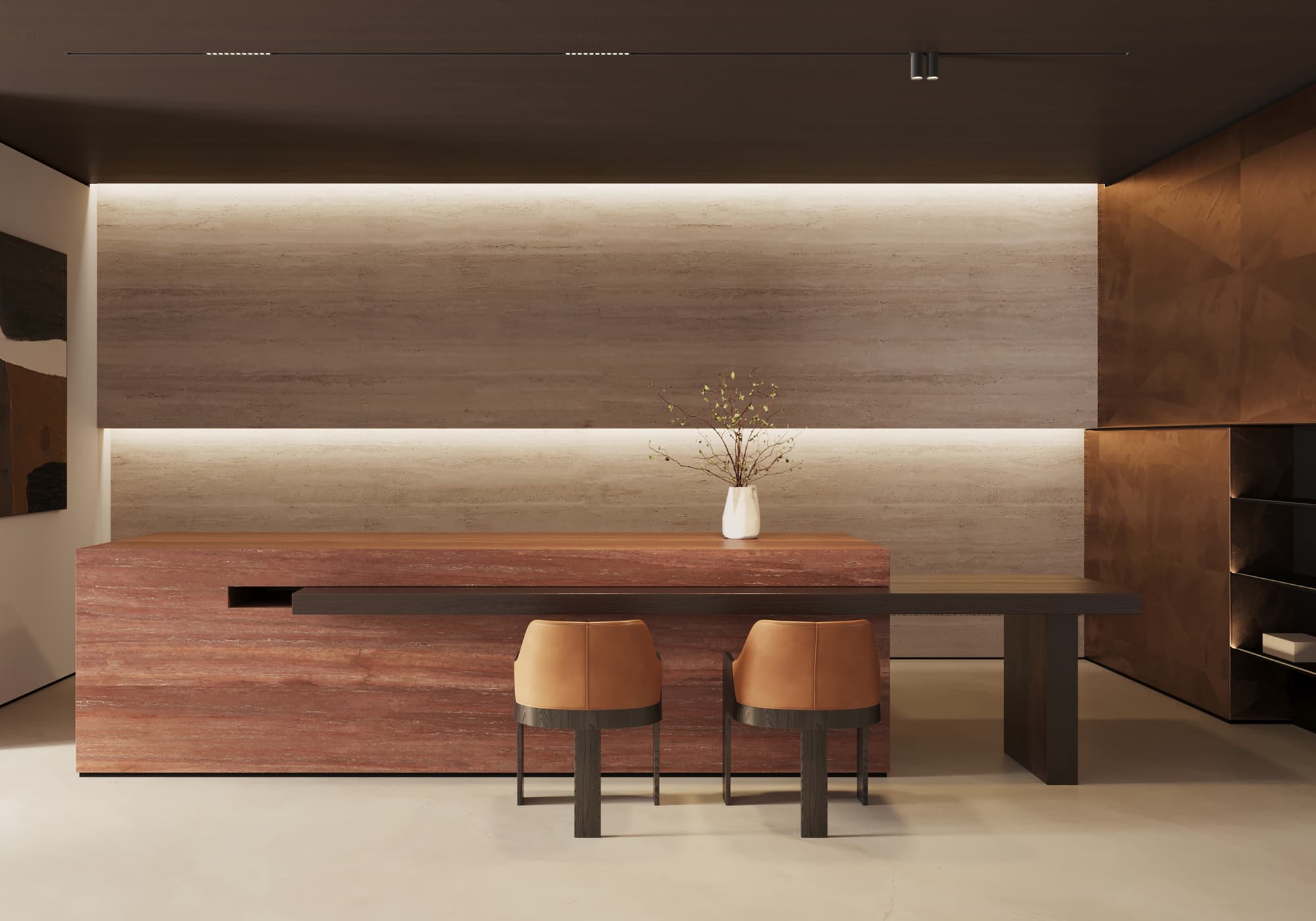
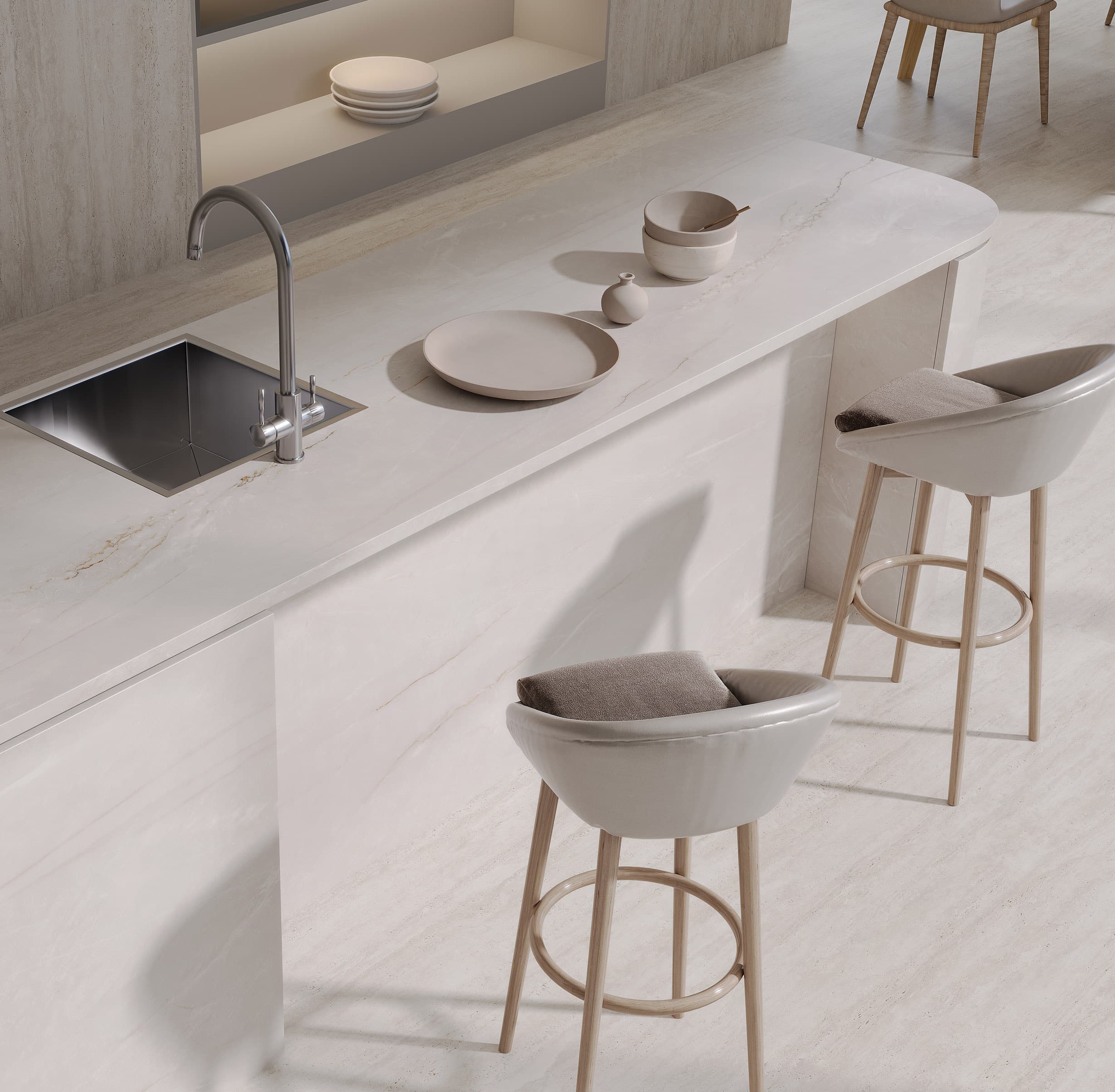
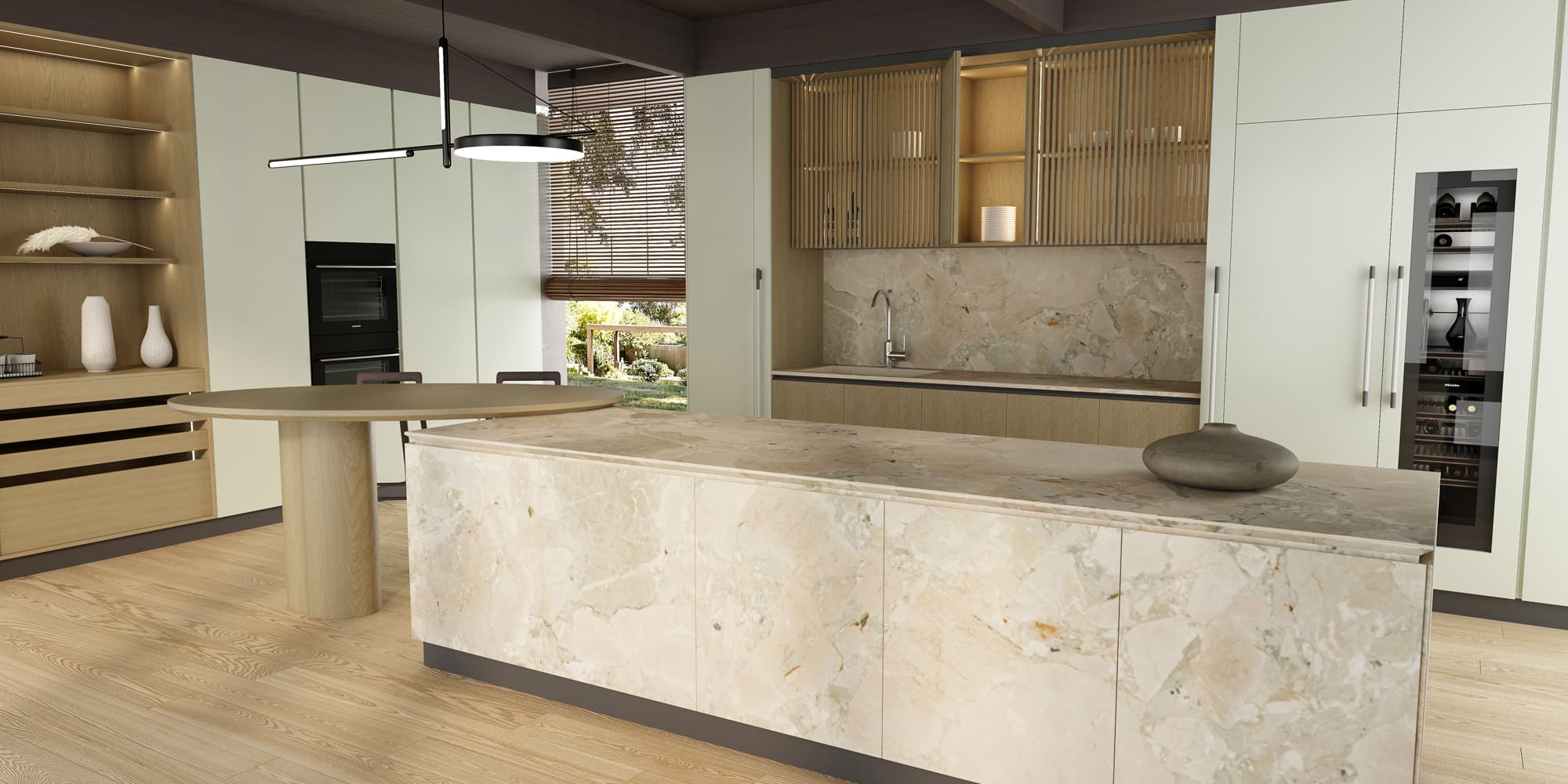
A selection of the 65 sintered slabs currently in the range. Every product page carries its own finish, format and slab specification.
Questions
Frequently asked questions
Sintered stone is a slab made by compacting natural mineral particles under extreme pressure and firing them at high temperature until they fuse. It contains no resin binders. The result is an ultra-compact, non-porous surface used for benchtops, splashbacks, cladding, flooring, outdoor kitchens and furniture.
They answer different briefs. Natural stone is chosen because every slab is unique — the veining in your benchtop exists nowhere else. Sintered stone is chosen because it is predictable: it resists heat, scratches, stains and UV, never needs sealing, and slabs of the same product match. MAMO supplies both, and the right one depends on whether you are buying individuality or consistency.
No. Sintered stone is non-porous, so there is no porosity to close — no sealing on installation and none over the life of the surface. This is one of the clearest practical differences from marble and limestone, which need periodic resealing.
Yes. Sintered stone is UV-stable, so it holds its colour in direct Australian sun rather than fading or yellowing. It is widely specified for alfresco kitchens, outdoor benchtops, pool surrounds and façades, and it lets a material run continuously from inside to outside.
Sintered stone is highly heat resistant, so a hot pan does not soften or mark it the way it can mark a resin-bound surface. Even so, any fabricator will recommend trivets near joins and cut-outs, where thermal stress concentrates in every material.
No. Engineered quartz binds stone particles together with a resin. Sintered stone has no binder — heat and pressure fuse the mineral particles directly to one another, so the slab is mineral through its full thickness.
No — MAMO is a slab supplier. We supply and deliver the full slab, and your own stonemason or fabricator templates, cuts and installs it. Our team can help you specify the right material, thickness and finish for the job.
See it in person
Order samples, or view full slabs at a MAMO showroom in Sydney or Newcastle before you specify.